
There Is Something You Should Know about NVIDIA's 5000 Series
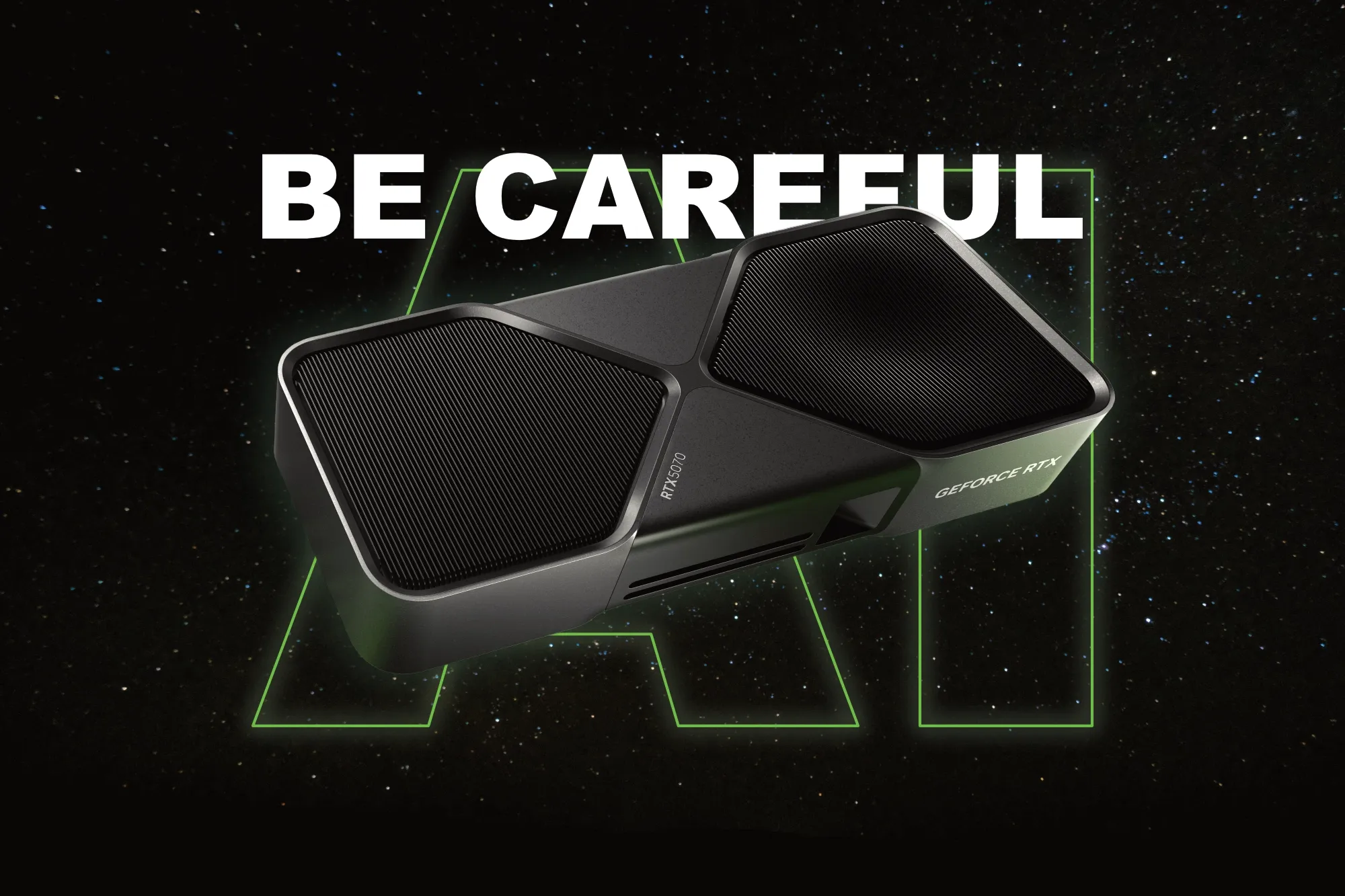
The wait for NVIDIA's new graphics cards was not something specific to the average consumer. Gigantic companies like Google, OpenAI, Anthropic, and Microsoft were all waiting for new GPU technology to power their efforts in AI development, as things began to slow down.
 Megan Sauer
Yet, after NVIDIA's keynote, what may have disappointed these corporations could also disappoint you.
The New Cards
Around three weeks ago, NVIDIA officially announced its new Blackwell architecture GPUs, which saw respectable increases in VRAM. At this point, a lot of people were expecting NVIDIA to absolutely rock the show with incredible hardware-powered improvements. Especially with Intel's new 'affordable' entries to the GPU market with their Battlemage cards, NVIDIA needed to make something special happen.
Spices of Fake Frames
The truth is, most people won't be able to afford something like the 5080 or 5090, so this is why NVIDIA focused its marketing on the 5070—a $549 dollar GPU that supposedly outperforms a $1599 4090. Is this true? Well... maybe? If we are talking about raw performance, then the 4090 is still the dominant one here. The 5070 is just not technically capable enough to outperform the Beast in this regard. However, once you add artificial intelligence and algorithms into the discussion, things do begin to change.
The 5070 does start to noticeably 'outperform' the 4090 when you switch on NVIDIA's new DLSS 4.0. The problem with DLSS 4.0 is that it's not really the actual image being shown to you; instead, it's technically a bundle of fake images that are being added by artificial intelligence. The way it works is by essentially predicting what the next frame will look like and then adding a 'fake' frame in between the current and the next one. The only noticeable gripe of this becomes apparent in games where latency actually matters, like first-person shooter titles.
Slight latency differences is not why a lot of people are upset, however. The problem with 'fake' frame generation is that it leads game developers to slack off on optimizing their games. "Oh, since DLSS 4.0 exists, we don't have to spend time and resources on optimizing our games." This is already apparent in games like Star Wars Jedi: Survivor, which gamers have complained of being terribly optimized whilst supporting DLSS. The more and more developers that start to abuse the power of DLSS, the less and less natively optimized games we will start seeing.
This leads us to the issue with the new RTX 5000 series. If NVIDIA begins to depend solely on artificial intelligence, we may begin to see less genuine technical advancement in GPU technology. It is simply much more affordable for corporations like NVIDIA to direct all investments on artificial intelligence rather than technological developments such as new architectures, increased core count, enhanced memory, and driver optimization.
The unfortunate reality is that it's not just NVIDIA in this situation—companies like Microsoft, Apple, Samsung, and others are all prioritizing artificial intelligence that, if we're being honest, most of us couldn't care less about.